 Jerusalem Old City Tour
Armenian Quarter Jerusalem
The Armenian Quarter Jerusalem is the smallest of the Old City's four quarters, and the one most visitors walk through without stopping. This guide covers what the quarter holds: St James Cathedral and its short daily opening window, the Armenian Museum, the Gulbenkian Library, the St Toros Manuscript Library and Zion Gate. It explains the community's claim to be the oldest living diaspora outside Armenia, the quarter's size and population figures, and which guided walks actually bring you here. For the other three quarters, see the guide to the four quarters of Jerusalem. Prices and hours come from the official listings on Jerusalem Old City tours.
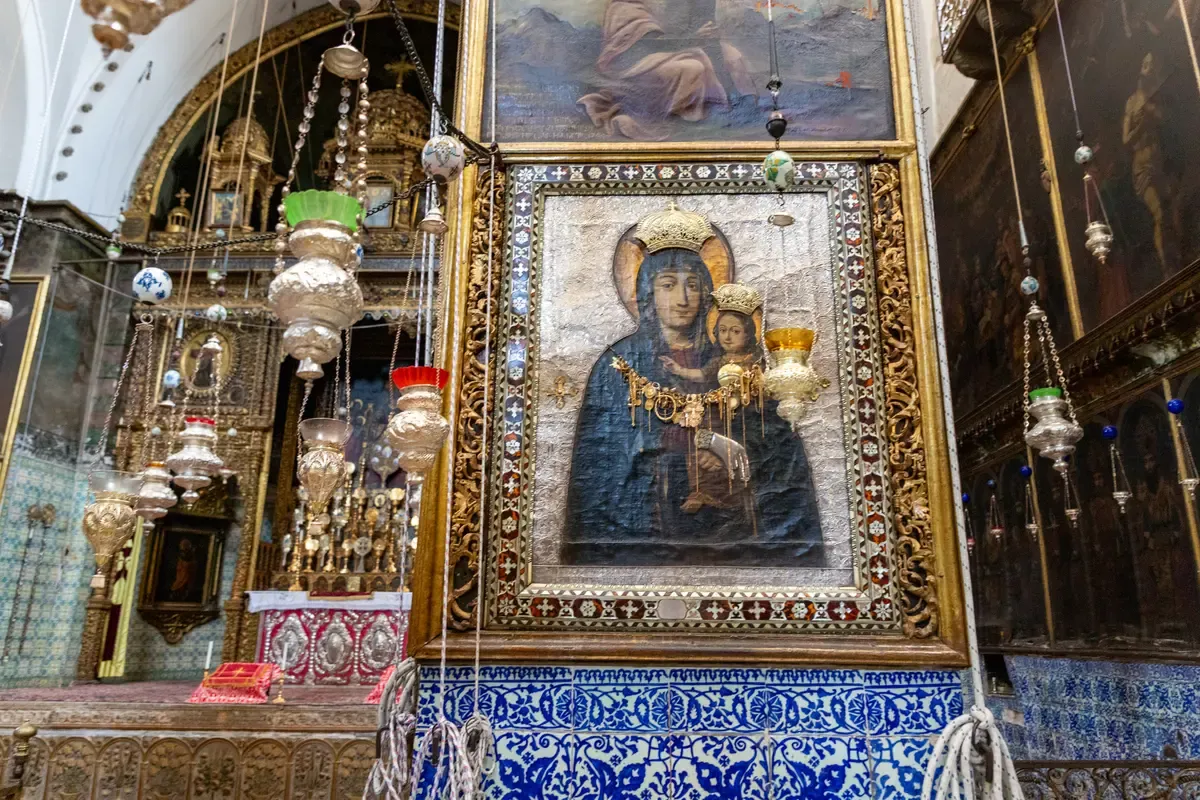
Hanging lamps and a painted icon of the Virgin and Child inside the Armenian Cathedral of St James. Photo: Oren Rozen, CC BY-SA 4.0, via Wikimedia Commons
Quick answer The Armenian Quarter at a glance
The Armenian Quarter Jerusalem covers 0.126 square kilometres, about 14% of the Old City, and Armenian settlement here dates to the 4th century. It is the smallest of the four quarters and is reached through Zion Gate or Jaffa Gate.
Key takeaways
- St James Cathedral opens only in short windows: 6:30 to 7:30 Monday to Friday and Sunday, 6:30 to 10:00 on Saturday, and 15:00 to 15:30 daily. Times in the cathedral section.
- The Armenian Museum opens Tuesday to Saturday 9:00 to 16:00 and closes Sunday and Monday. Details in the museum and library section.
- Guided walks that cover the quarter include the Jerusalem Old City Half-Day Tour at $39 per person and the Private Old City Four Quarters Tour at $500 per group. See which tours fit.
- The other three quarters, their sizes and their main sites sit in the guide to the four quarters of Jerusalem.
The Quarter in Brief
The Armenian Quarter is the smallest and quietest of the Old City's four quarters, and the hardest to pin down on population figures.
Size, Access and Standing
The quarter covers 0.126 square kilometres, or 126 dunams, about 14% of the walled city. The Old City as a whole covers 0.9 square kilometres. You can enter through Zion Gate on the southern wall or through Jaffa Gate in the west, where the plaza points you right past the Tower of David.
The Armenian Patriarchate gained formal patriarchal status in 1311 and runs the quarter like a small welfare state. Armenian settlement in Jerusalem goes back to the 4th century, and the community is described as the oldest living diaspora community outside Armenia.
The Population Question
Published resident counts for the quarter differ between sources, so this page uses one set of figures. The 2020 Old City figures list 2,160 residents in the Armenian Quarter, against about 21,850 in the Muslim Quarter, 3,870 in the Christian Quarter and 3,240 in the Jewish Quarter.
Churches and Libraries Inside the Walls
Beyond St James Cathedral, the quarter holds the Church of St Toros, built between 1270 and 1289, and the Church of the Holy Archangels, which dates from the 12th century. The St Toros Manuscript Library was founded in 1897 and holds 3,890 catalogued manuscripts. The Mardigian Museum occupies a 700 square metre building in the Patriarchate compound.
These are institutions of a living community, not a set of ruins.
Sources: Armenian Quarter, Old City of Jerusalem)
St James Cathedral
The Cathedral of St James is the main reason to time a visit to the Armenian Quarter carefully.
The Opening Window
The cathedral keeps unusually short hours. It opens Monday to Friday and Sunday from 6:30 to 7:30, on Saturday from 6:30 to 10:00, and every day again from 15:00 to 15:30. The 15:00 to 15:30 slot is the one that fits most visitors' day.
If you arrive outside these times you will find the doors shut, however close the landmark looks on your map. Build the 15:00 to 15:30 slot into your walking plan or accept that you will see the compound rather than the church interior.
What Is Inside
St James Cathedral was complete by the 12th century and has hanging ceramic eggs made in Kutahya. Photography rules are not published here, so ask on site. The Armenian Museum is open until 16:00 Tuesday to Saturday, so on those days the cathedral and the museum can share one visit.
Sources: Cathedral of St James, Christian Information Center opening hours
The Museum and the Library
Two institutions anchor the compound's cultural life: the Armenian Museum and the Gulbenkian Library.
The Armenian Museum
The Armenian Museum opens Tuesday to Saturday from 9:00 to 16:00 and closes Sunday and Monday. Entry details and any ticket price are not published here, so check on site. The museum is open until 16:00 while the cathedral's afternoon window ends at 15:30, so the practical order is cathedral first at 15:00, then the museum.
The Gulbenkian Library
The Gulbenkian Library was founded in 1925 and officially opened on 23 October 1932. It holds about 100,000 volumes. Visitor hours are not published here.
The St Toros Manuscript Library in the quarter holds 3,890 catalogued manuscripts.
Sources: Armenian Quarter, Christian Information Center opening hours
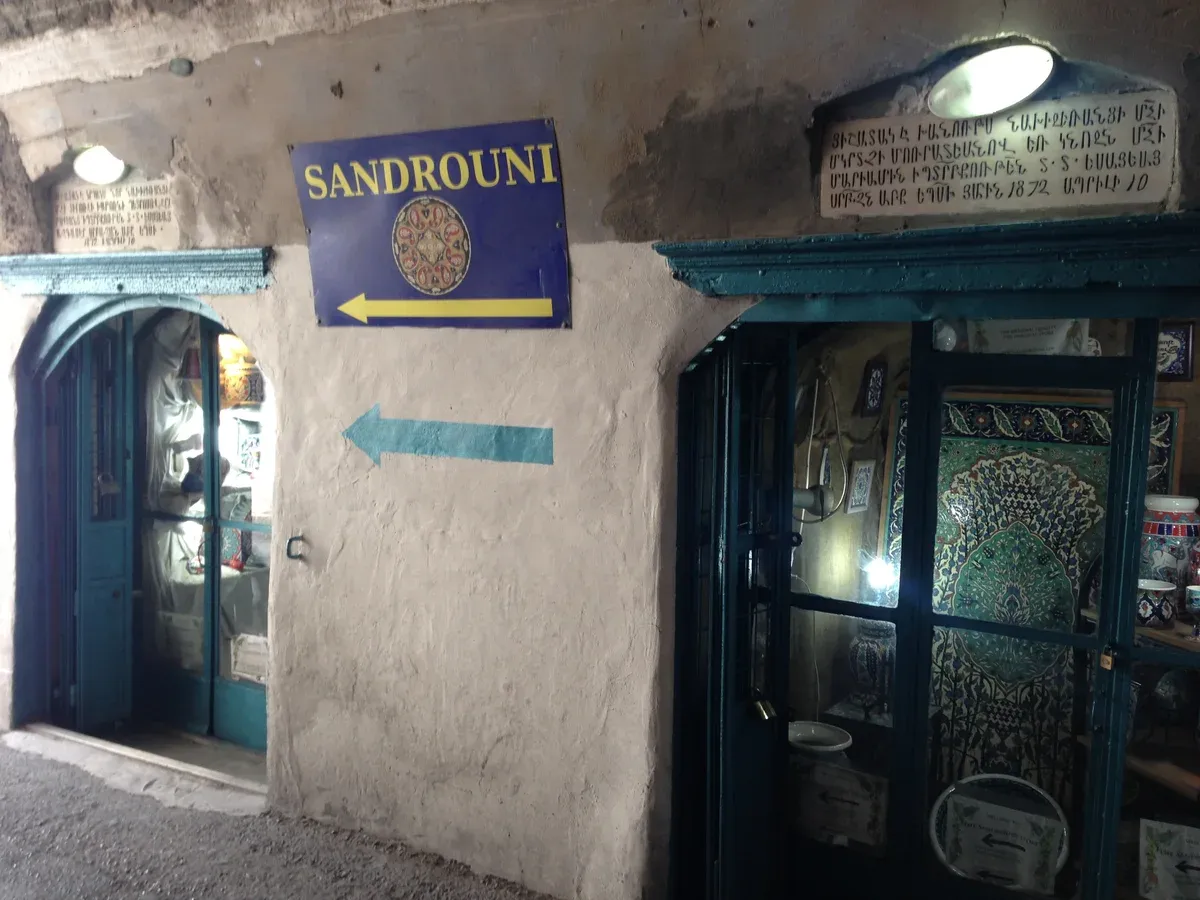
An Armenian ceramics shop with hand-painted tiles on Armenian Orthodox Patriarchate Road. Photo: Pandukht, CC BY-SA 4.0, via Wikimedia Commons
Fitting It Into a Visit
The quarter rewards precise timing and works well as part of a longer Old City walk.
The 15:00 to 15:30 Rule
Plan the Armenian Quarter around the cathedral's daily afternoon opening from 15:00 to 15:30. Arrive a few minutes before 15:00, see the cathedral, then move to the Armenian Museum, which stays open until 16:00 Tuesday to Saturday. Enter through Zion Gate, built in July 1540, which still shows bullet marks from the 1948 fighting.
Coming from Jaffa Gate instead, the plaza inside the gate leads to the Armenian Quarter on the right by the Tower of David. On Sunday and Monday the museum is closed.
Tours That Cover the Armenian Quarter
Not every Old City walk includes this quarter, so check the listing before you book. The comparison below covers the tours whose listings name the Armenian Quarter among the areas covered, with the prices as the operators publish them. Prices are per person unless a row says otherwise.
Opening hours and fees on this page come from the sources cited in each section.
| Tour | Price | Duration | How the quarter appears |
|---|---|---|---|
| Jerusalem Old City Half-Day Tour | $39 per person | 3 hours | Named among the four quarters covered |
| Jerusalem Old City Tour from Tel Aviv | $90 per person | 10.5 hours | Day trip covering all four quarters |
| Jerusalem and Bethlehem Tour from Tel Aviv | $121 per person | 10 hours | Named among the quarters covered, hotel pickup included |
| Private Jerusalem Holy City Tour | $190 per person | 3-5 hours | Private route through all four quarters, hotel meet-up |
| Private Old City Four Quarters Tour | $500 per group | 5 hours | Private five-hour walk of all four quarters |
What the Tours do and do Not Include
None of these listings states that the group enters St James Cathedral, and none includes food. The Private Jerusalem Holy City Tour builds a customizable itinerary through the Armenian, Jewish, Christian and Muslim quarters and meets you at your central Jerusalem hotel, but entry fees to attractions are not included. The Private Old City Four Quarters Tour is priced per group, not per person, and its guide waits outside Jaffa Gate with your name on a sign, though landing and facility fees are excluded.
If the cathedral's 15:00 to 15:30 window matters to you, confirm the timing with the operator when booking, because published tour start times do not always line up with it.
Two More Churches and a Manuscript Treasure
Beyond St James Cathedral, the quarter holds two more medieval churches and one of the world's important collections of Armenian manuscripts.
St Toros and the Holy Archangels
The Church of the Holy Archangels dates from the 12th century. The Church of St Toros was built between 1270 and 1289. Both sit inside the walled compound run by the Patriarchate, a short walk from the cathedral.
Neither is a museum with set hours in the published lists, so access depends on the compound's own routine. If you would rather have a guide handle the introductions, a private route such as the Private Jerusalem Holy City Tour covers the Armenian Quarter for $190 per person.
The St Toros Manuscript Library
Attached to the Church of St Toros is the St Toros Manuscript Library, founded in 1897. It holds 3,890 catalogued manuscripts, a collection built up over centuries of Armenian monastic life in Jerusalem. It is separate from the Gulbenkian Library, which opened in 1932 and holds printed volumes.
The manuscripts are the older and rarer holding of the two, and the library is counted among the quarter's most significant institutions.
The Oldest Diaspora Community and How It Runs Itself
The Armenian presence here is older than the walls around it, and the Patriarchate still governs the quarter with unusual autonomy.
Roots in the 4th Century
Armenian settlement in Jerusalem goes back to the 4th century, which makes the community the oldest living diaspora community outside Armenia. The Patriarchate gained formal patriarchal status in 1311, giving the church an official standing that it has kept through every later change of rule.
Armenian Quarter Questions
Why do the Armenians have a quarter in Jerusalem?
Armenian settlement in Jerusalem dates to the 4th century, and the community is described as the oldest living diaspora community outside Armenia. The Armenian Patriarchate gained formal patriarchal status in 1311. The four quarters guide sets the arrangement out in full.
Is the Armenian Quarter Christian?
Yes. The quarter's population is Armenian Christian, and its institutions are religious ones: the Cathedral of St James, the Armenian Patriarchate and the churches of St Toros and the Holy Archangels. It is distinct from the larger Christian Quarter to the northwest, which holds the Church of the Holy Sepulchre, as the Church of the Holy Sepulchre guide explains.
What are the four quarters of Jerusalem?
The walled Old City is divided into the Muslim Quarter in the northeast, the Christian Quarter in the northwest, the Jewish Quarter in the southeast and the Armenian Quarter, the smallest, in the southwest. A 2020 count gave them about 21,850, 3,870, 3,240 and 2,160 residents respectively. The full breakdown is in the four quarters of Jerusalem guide.
What are the opening hours of St James Cathedral?
The cathedral opens Monday to Friday and Sunday from 6:30 to 7:30, Saturday from 6:30 to 10:00, and daily from 15:00 to 15:30. For most visitors the practical window is the half hour at 15:00. If you would rather have a guide handle the route, the Jerusalem Old City Walking Tour covers the Old City from Jaffa Gate, though check whether the cathedral's hours fit its schedule.
Which gates give access to the Armenian Quarter?
The quarter can be reached through Zion Gate, built in July 1540, and through Jaffa Gate. Zion Gate sits on the southern wall and still shows bullet marks from the 1948 fighting. Mount Zion lies just outside the southern wall. The gates of Jerusalem Old City guide covers all eight named gates.
Can I visit the Armenian Quarter on a guided tour?
Several can. The Jerusalem Old City Half-Day Tour at $39 per person names the Armenian Quarter among the four it covers, and the Private Old City Four Quarters Tour at $500 per group spends five hours across all four with a private guide. Neither listing states entry to St James Cathedral, so if the interior matters to you, plan the 15:00 to 15:30 slot yourself.